Finding a Common Language for Transportation Solutions
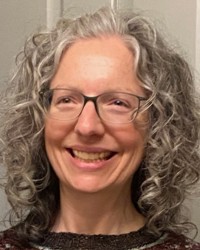
Sylvia Crum
Washington State Dept of Transportation (WSDOT), Public Transportation Division
As she manages the teams that handle planning, evaluation and transportation demand for WSDOT’s public transportation division, Sylvia Crum puts her University of Washington degree to work every day to serve communities across the state.
“Washington state is such a leader in sustainable transportation,” says Crum, who earned her Master of Sustainable Transportation in 2023. “I learned real-world solutions to complicated transportation issues by delving deep into what has been tried here in Washington and around the Pacific Northwest.”
We talked with Sylvia about how the UW Online Master of Sustainable Transportation degree program — including an inspiring study-abroad experience — helped her explore interests in active transportation and advance her career.
Why was the UW Online Master in Sustainable Transportation degree the right program for you?
When I joined the MST program, I was working on a city innovation team. At the time, my work focused on reducing drive-alone commutes to work. I found that as I spoke to city engineers and transit agency staff, it was like we were speaking a different language.
I pursued the MST degree because I wanted a better grounding in where those engineers and planners were coming from when our projects overlapped.
How did this degree program help you connect with colleagues or advance your career?
The MST program gave me a solid base of knowledge in transportation planning and engineering. As I earned my degree, I was better prepared to understand the limitations planners and engineers would see for a project, and my graduate study helped me identify how sustainable transportation could offer possible solutions to problems we were working on together.
Even before I completed the master’s program, I was able to leverage this study for a role in WSDOT’s Public Transportation Division, and my work has continued to evolve from there.
How did your study-abroad experience add to what you learned about active transportation and infrastructure in this program?
I was so pleased to have the opportunity to participate in the Valle Scholarship & Scandinavian Exchange Program. Though Valle had been available to MST students for a long time, I was the first MST program participant to take advantage of this funded study-abroad program. I was very lucky to have a job that could be done remotely, and a boss who was a great supporter of professional development!
I used the Valle experience to immerse myself in Stockholm and Sweden’s transportation system, and this was invaluable to me. I was able to use and explore a carefully planned and well-funded public transit system.
I had a chance to dig deep into some research that I never would have made time for at home, and I was able to see firsthand many of the topics I was learning about in my MST classes. Plus, I got to eat a LOT of cardamom buns.
What takeaways would you share with someone who’s considering the UW Online Master’s in Sustainable Transportation degree program?
There are so many advantages to participating in this master’s degree program. By taking these courses after working in the transportation industry for several years, I was able to ask informed questions and apply my own experience to the wide range of topics covered in the courses.
And because the classes are online, my cohort included transportation professionals from around the country. I appreciated learning from them and hearing about how their work was similar to and different from mine.
Thanks to Sylvia for sharing her experience! This Q&A has been edited and condensed for clarity. To learn more about applying to the UW Online Master of Sustainable Transportation, sign up to attend an info session, check out answers to frequently asked questions, or visit our Admissions page.